PCOS Renamed PMOS in 2026: What Every Woman Needs to Know About Polyendocrine Metabolic Ovarian Syndrome
Introduction
If you have been diagnosed with PCOS, you may have recently seen a new term: PMOS. This is not a new condition, and it is not a reason to panic. It is the same syndrome you already know—with a name that finally reflects what it actually is.
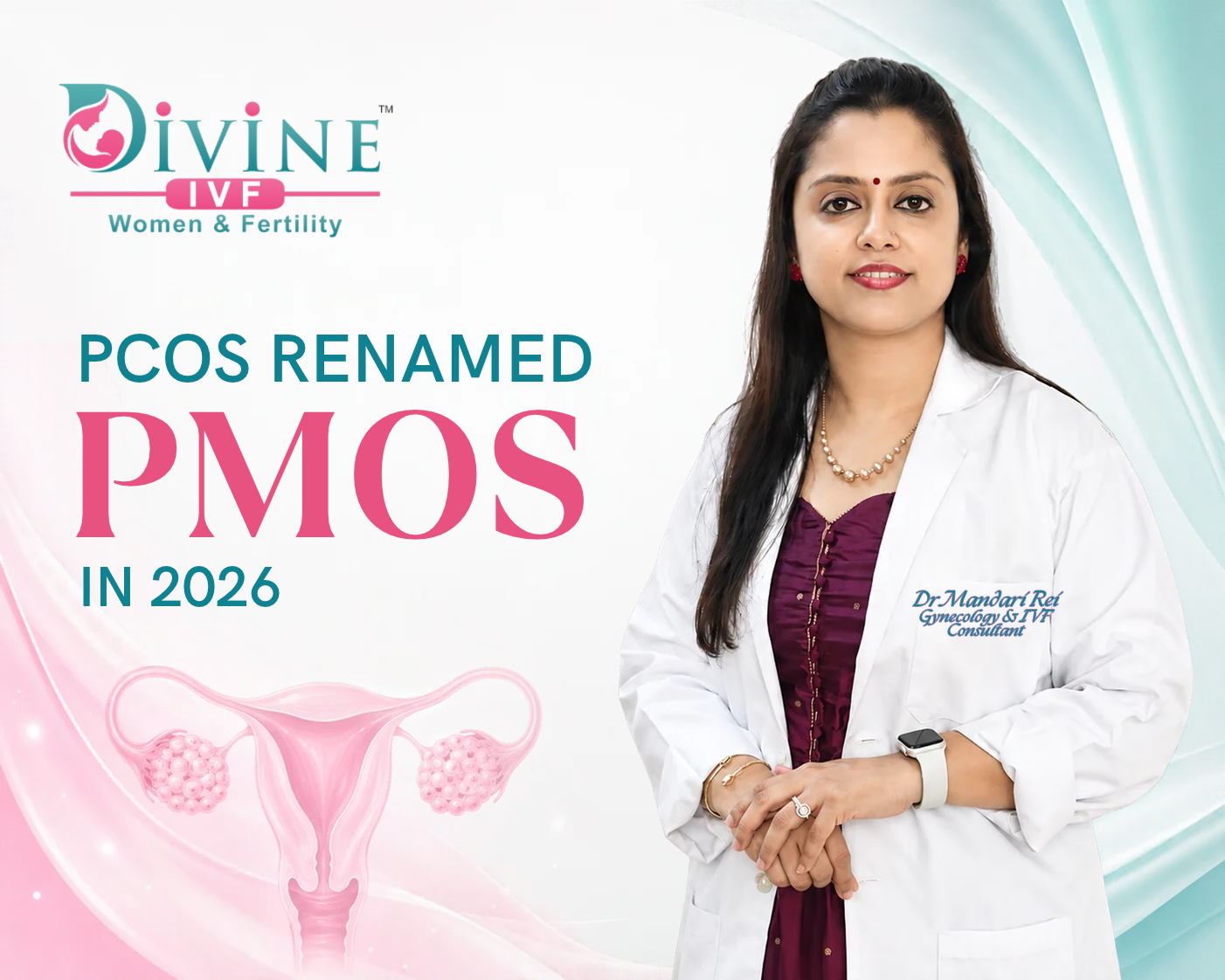
In May 2026, an international consensus published in The Lancet officially renamed Polycystic Ovary Syndrome (PCOS) to Polyendocrine Metabolic Ovarian Syndrome (PMOS) . The change followed years of concern that the old name was misleading, stigmatising, and medically inaccurate.
For women in India—where PCOS affects a significant proportion of reproductive-age women—this change matters. It signals a shift in how doctors understand and treat the condition, and it may improve the care you receive.
At Divine IVF, Noida, led by Dr. Mandavi Rai, this updated understanding is already part of how we approach fertility care for women with PMOS.
Why Was PCOS Renamed PMOS?
The Problem With "Polycystic"
The old name suggested that ovarian cysts were the defining feature of the condition. They are not.
The structures seen on ultrasound in PCOS are small follicles containing immature eggs—not pathological cysts that require surgery . Many women with the condition do not have this ultrasound appearance at all, yet they still have the syndrome.
This created real harm. Women without "cysts" were sometimes told they could not have PCOS, delaying diagnosis. Research suggests that up to 70% of affected women were never formally diagnosed .
The Problem With "Ovary Syndrome"
PCOS was never just about the ovaries. It involves insulin resistance, hormonal imbalances, metabolic dysfunction, and long-term health risks including type 2 diabetes and cardiovascular disease . By focusing on a single organ, the old name obscured the full picture—and led to fragmented, incomplete care.
The New Name
PMOS breaks down as:
Polyendocrine: Multiple hormone systems are involved, not just reproductive hormones
Metabolic: Insulin resistance and metabolic health are central to the condition
Ovarian: The ovaries remain involved, but are not the sole focus
Syndrome: A cluster of signs that vary from person to person
What the Name Change Means for You
Your Diagnosis Is Still Valid
If you were diagnosed with PCOS, you now have PMOS. You do not need to be retested or rediagnosed. The diagnostic criteria have not changed . Your treatment plan remains relevant.
Medical Records Will Use Both Terms
A three-year transition period is planned. During this time, you may see "PCOS," "PMOS," or "PMOS (formerly PCOS)" on reports, prescriptions, and lab results . This is normal and does not indicate confusion about your care.
The Focus of Care Is Shifting
The renaming is not just semantics. It signals a move toward:
Earlier diagnosis for women without classic ultrasound findings
More comprehensive care that addresses metabolic health alongside fertility
Less stigma from a name that implied "cysts"
PMOS and Fertility: What Actually Matters
For women trying to conceive, the most important question is not what the ovaries look like on an ultrasound—it is whether ovulation is happening regularly.
The Ovulation Problem
In PMOS, insulin resistance and elevated androgens can disrupt the hormonal signals that trigger ovulation. This leads to irregular or absent periods, which means fewer opportunities for conception .
When to Seek Help
The standard advice to "try for 12 months before seeking fertility evaluation" does not apply if your cycles are irregular .
If your periods are unpredictable, speak to a fertility specialist sooner rather than later. An evaluation can determine whether PMOS is affecting ovulation and what treatment—often simple ovulation induction—may help.
Treatment Options Remain the Same
The name change does not alter treatment. First-line fertility treatment for PMOS-related anovulation is typically ovulation induction with medications such as letrozole, which has been shown to achieve higher live birth rates than older medications like clomiphene .
For women who do not conceive with ovulation induction alone, treatments such as IUI or IVF may be considered. At Divine IVF, these options are available under one roof, with protocols tailored to your specific response.
The Metabolic Connection: Why "Metabolic" Is Now in the Name
This is perhaps the most significant addition to the name—and the one with the longest-term implications.
Insulin Resistance
Insulin resistance is present in a large proportion of women with PMOS, with estimates ranging from 35% to 80% depending on the population studied . High insulin levels stimulate the ovaries to produce more testosterone, which disrupts ovulation and contributes to symptoms like acne and excess hair growth .
Long-Term Health Risks
PMOS is associated with:
3–7 times higher risk of type 2 diabetes
Increased risk of metabolic syndrome (30–40% of obese women with PMOS)
Higher cardiovascular risk that persists after menopause
Increased risk of endometrial hyperplasia due to chronic anovulation
These risks are not meant to alarm—they are meant to inform. With proper monitoring and lifestyle management, they can be significantly reduced.
What This Means for Your Care
Your fertility doctor should not only focus on getting you pregnant. They should also consider your metabolic health—because it affects egg quality, pregnancy outcomes, and your long-term wellbeing.
At Divine IVF, this whole-person approach is part of how PMOS is managed, with attention to both reproductive and metabolic factors.
What Has NOT Changed
Despite the new name, several things remain the same:
Diagnostic criteria: Still based on the Rotterdam criteria—irregular ovulation, signs of excess androgens, and ovarian morphology (or elevated AMH)—after excluding other causes
Treatment approaches: Lifestyle management, ovulation induction, and assisted reproduction remain the core options
Your need for care: The condition is lifelong, and monitoring should continue beyond your reproductive years
A Note on the Debate
The renaming was not without controversy. Some endocrinologists have argued that retaining "ovarian" in the name still overemphasises a single organ, and that PMOS may represent multiple distinct conditions rather than one syndrome . These debates are part of the scientific process.
For patients, the practical takeaway is simpler: the condition you have is real, it is treatable, and the new name reflects a more complete understanding of what it involves.
Why Divine IVF for PMOS Care?
At Divine IVF, Sector 76, Noida, Dr. Mandavi Rai brings over 15 years of fertility experience, including a Fellowship in Reproductive Medicine from CREST, NUHS, Singapore, and previous roles as Centre Head at Indira IVF, Noida.
The clinic's approach to PMOS is built on:
Individualised ovulation induction protocols tailored to your response
Attention to metabolic health alongside fertility treatment
Advanced options under one roof, including IUI, IVF, and ICSI
Honest, stigma-free counselling about what PMOS means for your fertility and your health
As Dr. Rai emphasises: "There is no one-size-fits-all path to parenthood. My role is to understand, guide and support you with the right care, at the right time."
FAQs
Is PMOS a new disease?
No. PMOS is the new name for PCOS. The condition itself has not changed—only the terminology used to describe it .
Do I need to be retested now that PCOS is called PMOS?
No. Your existing diagnosis remains valid. You do not need repeat testing solely because of the name change .
Will my doctor still use the term PCOS?
Possibly, during the transition period. Medical records and reports may use both terms for the next few years. This is expected and does not affect your care .
Does PMOS affect fertility differently than PCOS?
The condition is the same, so the fertility impact is the same. The name change does not alter how PMOS affects ovulation or fertility treatment .
Is PMOS curable?
PMOS is a lifelong condition, but it is manageable. With appropriate treatment and lifestyle support, many women with PMOS conceive successfully and maintain good long-term health .
Should I see a fertility specialist if I have irregular periods and PMOS?
Yes, especially if you are trying to conceive. Irregular cycles suggest ovulation may not be occurring consistently, and earlier evaluation can help you access treatment sooner .
Conclusion
The renaming of PCOS to PMOS is more than a vocabulary update. It is a recognition that this condition involves your hormones, your metabolism, and your overall health—not just your ovaries.
For women trying to conceive, the message is clear: PMOS is treatable, and the right care addresses the whole picture. If you have irregular cycles or a PCOS/PMOS diagnosis and are planning pregnancy, do not wait a year before seeking help.
Book a consultation with Dr. Mandavi Rai at Divine IVF, Sector 76, Noida, to discuss your PMOS diagnosis and build a personalised fertility plan based on your specific needs.
📞 Clear answers. Personalised care. The right next step.
Disclaimer: Fertility treatment outcomes vary by individual medical profile. This information is for educational purposes and is not a substitute for personalised medical advice. Consult a qualified fertility specialist for guidance specific to your situation.