
Ovarian Cyst Removal in Noida Diagnosis and treatment of ovarian cysts, planned to protect ovarian health
Ovarian cysts are fluid-filled sacs that can develop on or within the ovary. Most are harmless and resolve on their own, but some require monitoring or treatment, particularly if they cause symptoms or affect fertility.
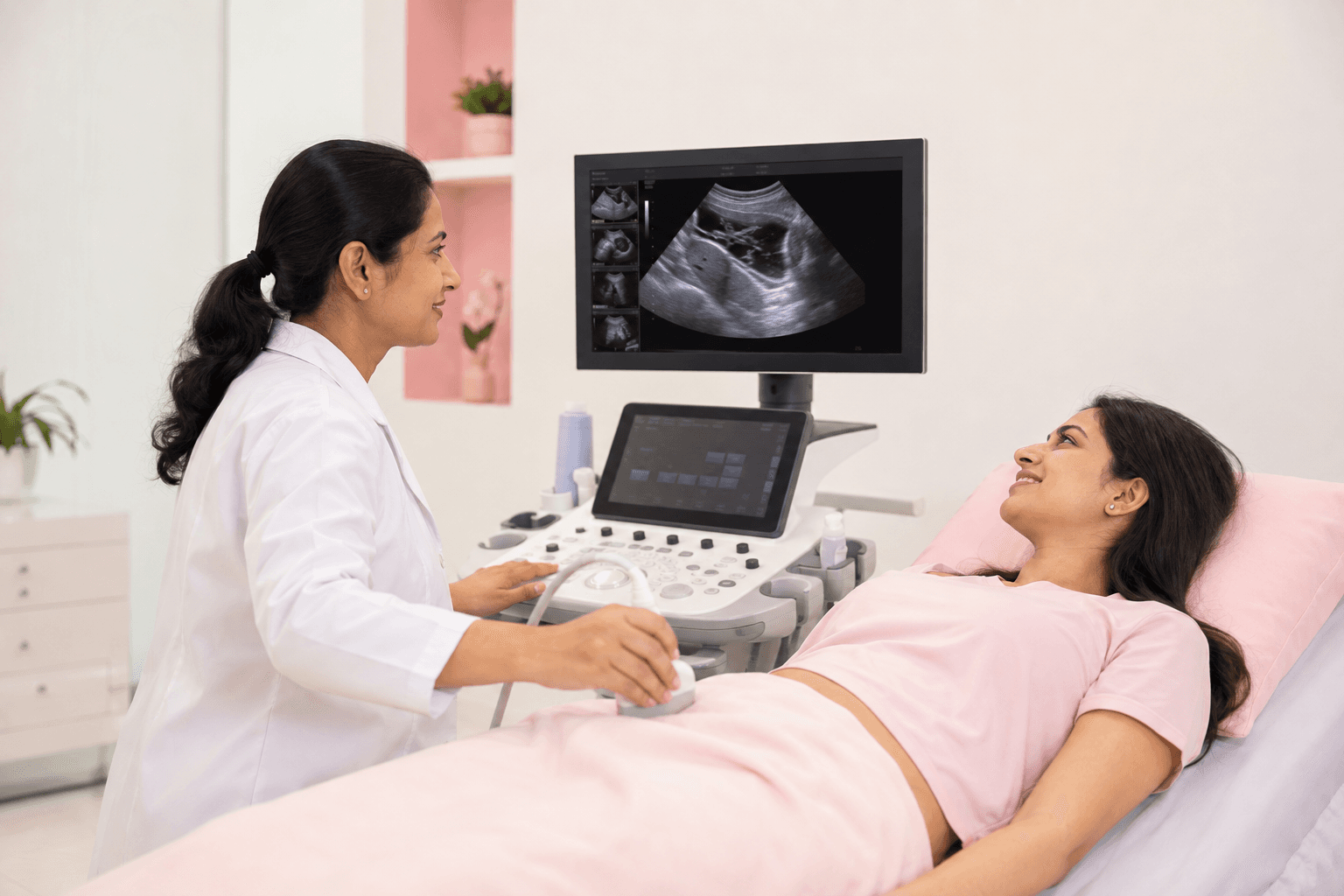
What is Ovarian Cyst Removal?
An ovarian cyst is a fluid-filled sac that forms on or within the ovary. Many cysts are functional, forming as part of the normal menstrual cycle, and resolve on their own within a few cycles. Other cysts, such as endometriomas or dermoid cysts, may persist and require evaluation or treatment.
Most ovarian cysts are non-cancerous and cause no symptoms, being discovered incidentally during a routine scan. However, some cysts can cause pain, affect ovarian function, or require surgical removal depending on their size, type, and characteristics.
At Divine IVF, Sector 76, Noida, Dr. Mandavi Rai evaluates ovarian cysts using ultrasound, and where surgery is needed, aims to remove the cyst while protecting healthy ovarian tissue and future fertility potential.
How it works
Step 1 – Initial Ultrasound Assessment
Ultrasound is used to characterise the cyst`s size, type, and features, helping determine whether it is likely functional or requires further evaluation.
Step 2 – Monitoring or Further Testing
Many cysts are monitored with a repeat scan; if concerning features are present, additional tests such as blood markers or MRI may be advised.
Step 3 – Treatment Discussion
If the cyst persists, grows, or causes symptoms, your doctor discusses whether surgical removal is appropriate.
Step 4 – Laparoscopic Cystectomy
When surgery is needed, laparoscopic removal of the cyst is generally preferred, aiming to preserve healthy ovarian tissue.
Step 5 – Recovery and Follow-Up
After surgery, follow-up care includes monitoring recovery and discussing any impact on fertility or ongoing management needs.
Benefits
- Clarifies whether a cyst is likely to resolve on its own or requires further evaluation or treatment
- Laparoscopic removal aims to preserve healthy ovarian tissue, which is important for future fertility
- Can relieve pain and other symptoms associated with larger or persistent cysts
- Helps rule out or identify conditions such as endometriomas that may need broader management
- Reduces the risk of complications such as cyst rupture or ovarian torsion in select cases
Things to know
- Not all ovarian cysts require treatment — many functional cysts resolve without any intervention
- Surgical removal carries a small risk of affecting ovarian reserve, particularly with certain cyst types like endometriomas
- Recurrence of cysts, particularly endometriomas, is possible even after removal
- Sudden severe pelvic pain can occasionally indicate a cyst complication such as torsion or rupture, which needs urgent evaluation
- The approach to surgery — laparoscopic versus open — depends on cyst size, characteristics, and other individual factors
Getting ready
Functional cysts are often simply monitored with a repeat ultrasound after one or two menstrual cycles before further action is taken.
Bring any previous ultrasound reports for comparison, as changes in cyst size or appearance over time are informative.
If surgery is planned, your doctor will provide specific pre-operative instructions, including any necessary blood tests.
What to expect
Many ovarian cysts require only monitoring rather than treatment, with a repeat ultrasound scheduled to check for resolution. If surgery is recommended, laparoscopic cystectomy is typically an outpatient or short-stay procedure with a relatively quick recovery compared to open surgery. Your doctor will explain the specific approach recommended based on your cyst`s characteristics.
Ovarian Cyst Removal in Noida
Individualised evaluation and, when needed, tissue-preserving surgical treatment of ovarian cysts at Divine IVF, Noida.
📍 Sector 76, Noida, Uttar Pradesh
📞 Call: +91 7678451808
Types of Ovarian Cysts
Functional Cysts
Form as part of the normal menstrual cycle and typically resolve on their own within one to two cycles without treatment.
Endometriomas
Cysts caused by endometriosis tissue within the ovary, sometimes called `chocolate cysts`, which may require surgical treatment.
Dermoid Cysts
Cysts that can contain tissue such as hair or skin, present from birth and generally requiring surgical removal if they grow or cause symptoms.
Cystadenomas
Cysts that develop from ovarian tissue and can sometimes grow quite large, generally requiring surgical evaluation.
Symptoms That May Suggest an Ovarian Cyst
Ovarian cysts often cause no symptoms, but some women experience:
Sudden, severe pelvic pain should be evaluated urgently, as it may indicate a cyst complication.

Who Should Be Evaluated
Consider evaluation for an ovarian cyst if:
Most cysts are monitored initially, with surgery considered only when needed.
Diagnosing Ovarian Cysts
Evaluation typically combines imaging with, in select cases, blood testing:
Pelvic Ultrasound
The primary tool for identifying and characterising ovarian cysts, helping distinguish likely functional cysts from those needing further evaluation.
Repeat Ultrasound
Follow-up scanning after one or two cycles helps determine whether a cyst is resolving on its own.
Blood Tests
Certain blood markers may be used in select cases to help characterise a cyst, particularly if there are concerning features.
MRI
May be used for more detailed evaluation of complex or large cysts in select cases.
Treatment Options for Ovarian Cysts
Treatment depends on cyst type, size, symptoms, and fertility considerations.
Watchful Monitoring
Most functional cysts simply require a follow-up scan to confirm resolution, without any active treatment.
Pain Management
Medication may be used to manage discomfort associated with a cyst while it is being monitored.
Laparoscopic Cystectomy
Minimally invasive surgical removal of the cyst, generally preferred to preserve healthy ovarian tissue.
Emergency Surgery
Required in cases of suspected ovarian torsion or significant cyst rupture, which need urgent evaluation and treatment.
Benefits of Structured Ovarian Cyst Care
- ✓ Avoids Unnecessary SurgeryMonitoring helps identify cysts that resolve naturally without needing an operation.
- ✓ Preserves Fertility PotentialTissue-preserving surgical technique aims to protect healthy ovarian function.
- ✓ Relieves SymptomsTreatment can significantly reduce pain and discomfort associated with persistent cysts.
- ✓ Supports Fertility PlanningClarifies whether a cyst needs to be addressed before proceeding with fertility treatment.
If you have a known or suspected ovarian cyst, Dr. Mandavi Rai at Divine IVF, Noida can guide you through evaluation and, if needed, treatment.
Book ConsultationResources
Common questions
An ovarian cyst is a fluid-filled sac that forms on or within the ovary; most are functional and resolve on their own within a few menstrual cycles.
Most ovarian cysts are non-cancerous and harmless, though some require monitoring or treatment depending on their size, type, and symptoms.
No, many cysts, particularly functional ones, resolve without treatment; surgery is generally reserved for persistent, large, or symptomatic cysts, or those with concerning features.
Some cysts, such as endometriomas, can affect ovarian function and fertility, while others have little to no impact; evaluation helps clarify individual significance.
A laparoscopic cystectomy is a minimally invasive surgical procedure to remove an ovarian cyst while aiming to preserve healthy ovarian tissue.
Yes, some types of cysts, particularly endometriomas, can recur even after surgical removal, so follow-up monitoring may be advised.
Many cysts cause no symptoms, but larger cysts may cause pelvic pain, bloating, or pressure; sudden severe pain can indicate a complication requiring urgent evaluation.
Ovarian cysts are typically diagnosed and monitored using pelvic ultrasound, sometimes alongside blood tests or MRI for further characterisation.
Surgical removal, particularly of endometriomas, can sometimes affect ovarian reserve, which is why a careful, tissue-preserving surgical approach is used.
Cost depends on the type of surgery required. Book a consultation for a personalised evaluation and estimate.
Ready to talk to Dr. Mandavi Rai?
Bring your questions, your history, and your pace — we`ll build the next step together.