
Ovulation Induction in Noida Personalised fertility treatment to help regulate ovulation and support conception
Ovulation induction is a fertility treatment that uses medication to stimulate the ovaries to release one or more mature eggs. It is commonly recommended for women who do not ovulate regularly or at all, a condition often associated with PCOS, hormonal imbalances, or unexplained infertility.
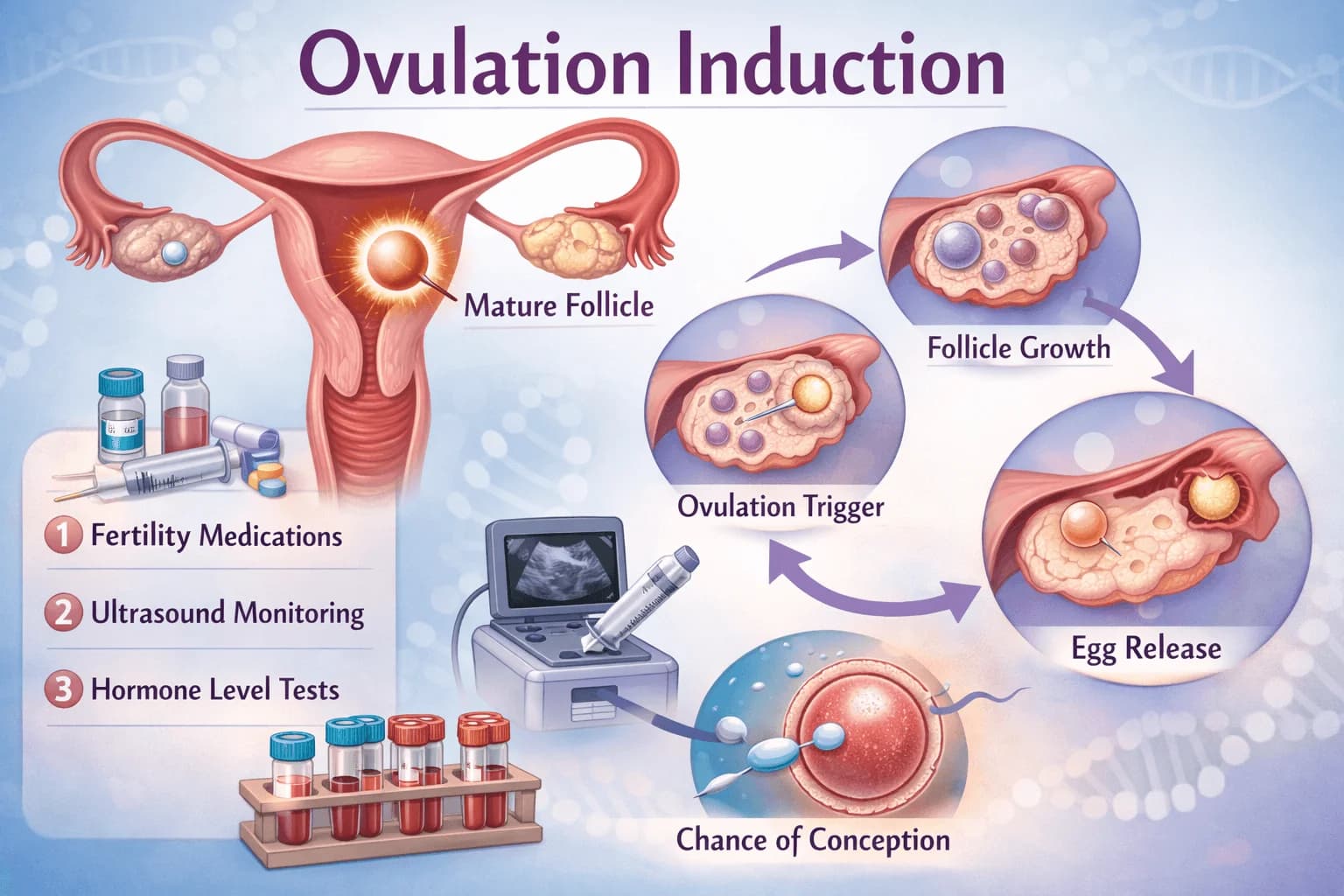
What is Ovulation Induction?
Ovulation induction (OI) is a medical treatment that uses oral medications or hormone injections to stimulate the ovaries to produce and release mature eggs.
It is often the first-line fertility treatment for women with irregular or absent ovulation, including those with Polycystic Ovary Syndrome (PCOS).
The goal is to restore a normal ovulatory pattern—typically producing one healthy egg per cycle—to improve the chances of natural conception.
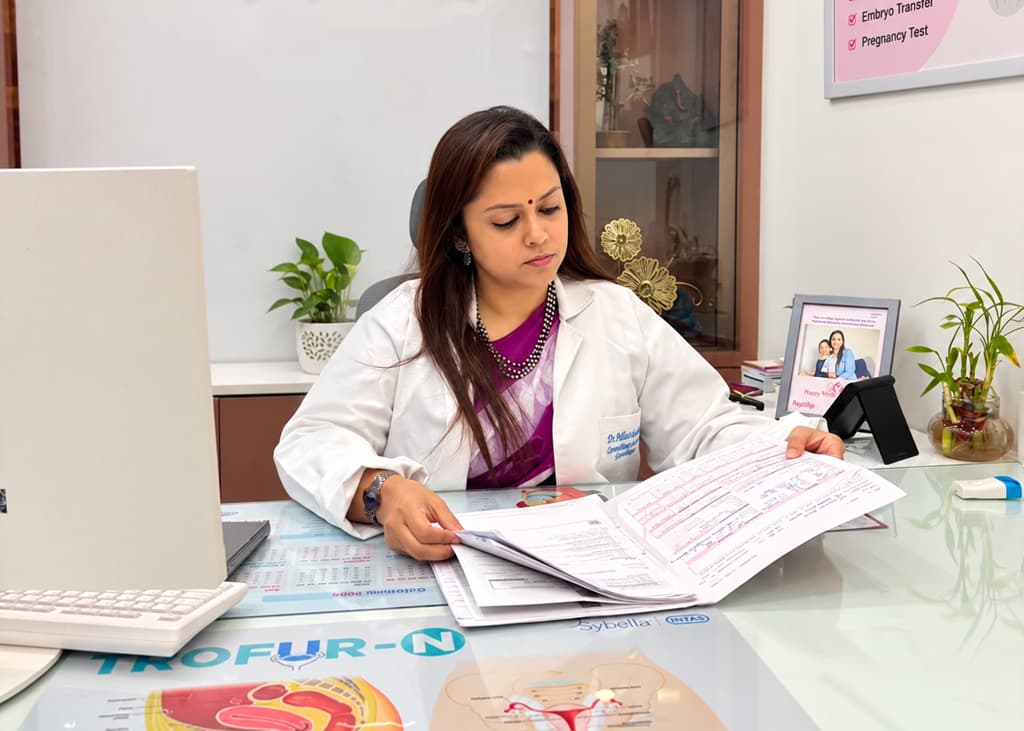
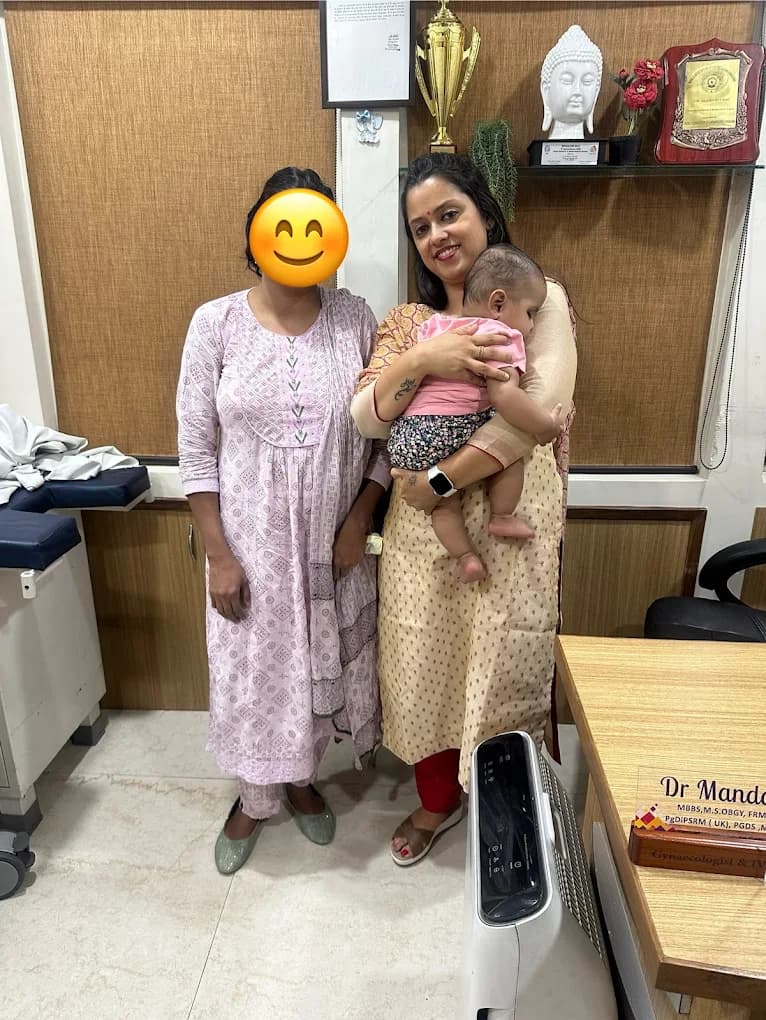
At Divine IVF, Sector 76, Noida, Dr. Mandavi Rai provides personalised ovulation induction treatment with close monitoring to optimise timing and safety.
How it works
Step 1 – Baseline Assessment
A baseline ultrasound and blood test are performed at the start of your cycle to confirm there are no ovarian cysts and to establish baseline hormone levels.
Step 2 – Medication Initiation
Ovulation induction medication is started—either oral tablets (such as Letrozole or Clomiphene) or injectable gonadotropins (FSH), depending on your individual needs.
Step 3 – Follicle Monitoring
Regular transvaginal ultrasound scans and blood tests are performed to monitor follicle growth and determine when the egg(s) are mature.
Step 4 – Trigger Injection
Once a mature follicle is identified, a 'trigger shot' of hCG may be given to induce final egg maturation and release. The timing of this injection is critical.
Step 5 – Timed Intercourse or IUI
You will be advised to have timed intercourse or undergo an Intrauterine Insemination (IUI) procedure around the time of ovulation to maximise the chance of conception.
Step 6 – Luteal Support
Progesterone support may be prescribed after ovulation to help prepare the uterine lining for a potential pregnancy.
Step 7 – Pregnancy Test
A pregnancy test is typically scheduled about two weeks after ovulation or the IUI procedure.
Benefits
- A less invasive and more affordable fertility treatment compared to IVF
- Can restore regular ovulation and improve chances of natural conception
- Often successful as a first-line treatment for PCOS and irregular ovulation
- Allows for precise timing of intercourse or IUI to maximise fertility
- Can be combined with IUI for enhanced success rates
- Close monitoring helps reduce the risk of multiple pregnancies
- Provides valuable diagnostic information about your ovarian response
Things to know
- Requires frequent monitoring appointments during the treatment cycle
- May cause mild side effects such as bloating, headaches, or mood changes
- Risk of multiple pregnancy if more than one egg is released
- Rare risk of Ovarian Hyperstimulation Syndrome (OHSS), especially with injectable medications
- Treatment may need to be adjusted or cancelled if too many follicles develop
- Not all women respond to oral medications — injectable gonadotropins may be needed
- Success rates vary depending on age, underlying cause, and other factors
Getting ready
Before starting treatment, a thorough evaluation is performed to identify the cause of ovulation problems. This may include blood tests for hormone levels, a pelvic ultrasound, and a semen analysis for the partner.
Your doctor will review your medical history, menstrual cycle pattern, and any previous fertility treatments to determine the most appropriate medication and dosage.
For oral medications, you may be advised to take the tablets on specific days of your cycle. For injectable medications, our team will teach you or your partner how to administer the injections safely at home.
You will be given a schedule for monitoring appointments, which typically involve transvaginal ultrasound scans and blood tests to track follicle growth and hormone levels.
What to expect
Ovulation induction is a well-established and commonly used fertility treatment. You will need to attend several monitoring appointments during the cycle, which may involve ultrasound scans and blood tests. The treatment itself is not painful, though some women may experience mild side effects such as bloating, headaches, or mood swings. The entire cycle from medication start to pregnancy test typically takes about 4-6 weeks. Your doctor will guide you through each step and adjust the treatment based on your response.
Ovulation Induction in Noida
Personalised fertility treatment to help regulate ovulation and support conception at Divine IVF, Sector 76, Noida.
📍 Sector 76, Noida, Uttar Pradesh
📞 Call: +91 7678451808
Oral vs Injectable Ovulation Induction
Oral Medications
Tablets taken for a few days at the start of the cycle. Common options include:
- Letrozole — often first choice, especially for PCOS
- Clomiphene Citrate — long-established treatment
- Simpler and less expensive
- Lower risk of multiple pregnancy
- Requires monitoring but fewer injections
Injectable Gonadotropins
Hormone injections (FSH) given daily for 8-14 days. Used when:
- Oral medications have not worked
- A more controlled ovarian response is needed
- Preparing for IUI or IVF
- Higher success rates per cycle
- Requires closer monitoring and dose adjustment
Your doctor will recommend the most appropriate option based on your individual situation.
Why Is Ovulation Induction Performed?
Ovulation induction is recommended when a woman is not ovulating regularly or at all, or when the timing of ovulation needs to be controlled for fertility treatment.
Polycystic Ovary Syndrome (PCOS)
PCOS is one of the most common causes of ovulation problems. Hormonal imbalance disrupts normal follicle development, preventing regular egg release. Ovulation induction helps stimulate the ovaries to produce and release a mature egg.
Hypothalamic Dysfunction
The hypothalamus is the brain region that signals the pituitary gland to release hormones that trigger ovulation. Stress, excessive exercise, low body weight, or certain medical conditions can disrupt this signalling, leading to irregular or absent ovulation.
Hyperprolactinemia
Elevated levels of prolactin (a hormone involved in milk production) can interfere with the hormones that control ovulation. Medication to lower prolactin levels, sometimes combined with ovulation induction, can restore normal ovulation.
Unexplained Infertility
In some couples, no specific cause of infertility is found. Ovulation induction, often combined with IUI, can improve the chances of conception by ensuring that eggs are released at the optimal time.
Preparation for IUI or IVF
Ovulation induction is an essential part of Intrauterine Insemination (IUI) and In Vitro Fertilisation (IVF) cycles. It helps produce multiple mature eggs, increasing the number of eggs available for fertilisation or insemination.
Ovulation Induction for PCOS
Polycystic Ovary Syndrome (PCOS) is the most common cause of ovulation-related infertility. Women with PCOS often have irregular cycles and may not release an egg regularly.
Ovulation induction is the first-line fertility treatment for women with PCOS who are trying to conceive.
Key Considerations for PCOS
Treatment is always personalised based on your individual response and medical history.
Does Every Woman with PCOS Need Ovulation Induction?
No.
Some women with PCOS may ovulate occasionally and conceive naturally. Ovulation induction is recommended when irregular ovulation is preventing conception or when timed treatment is needed.
Ovulation Induction vs IVF
Ovulation Induction
A simpler, less invasive fertility treatment that uses medication to stimulate egg release. It is often combined with timed intercourse or IUI.
Advantages
- Less invasive — no egg retrieval procedure
- Lower cost than IVF
- Can be tried before advancing to IVF
- Often successful for PCOS and irregular ovulation
Limitations
- Lower success rate per cycle than IVF
- Requires functional fallopian tubes
- Multiple cycles may be needed
- Not suitable for blocked tubes or severe male factor
IVF (In Vitro Fertilisation)
A more advanced treatment where eggs are retrieved, fertilised in a laboratory, and the resulting embryo is transferred to the uterus.
Advantages
- Higher success rate per cycle
- Can address blocked tubes and male factor
- Allows genetic testing of embryos if needed
Considerations
- More invasive — involves egg retrieval
- Higher cost
- Requires daily injections and monitoring
- Risk of OHSS
The choice between OI and IVF depends on your diagnosis, age, and individual circumstances.
Ovulation Induction Procedure – Step by Step
Step 1 – Baseline Assessment
A baseline ultrasound and blood test are performed at the start of your cycle to confirm there are no ovarian cysts and to establish baseline hormone levels.
Step 2 – Medication Initiation
Ovulation induction medication is started—either oral tablets (such as Letrozole or Clomiphene) or injectable gonadotropins (FSH), depending on your individual needs.
Step 3 – Follicle Monitoring
Regular transvaginal ultrasound scans and blood tests are performed to monitor follicle growth and determine when the egg(s) are mature.
Step 4 – Trigger Injection
Once a mature follicle is identified, a trigger shot of hCG may be given to induce final egg maturation and release. The timing of this injection is critical.
Step 5 – Timed Intercourse or IUI
You will be advised to have timed intercourse or undergo an Intrauterine Insemination (IUI) procedure around the time of ovulation to maximise the chance of conception.
Step 6 – Luteal Support
Progesterone support may be prescribed after ovulation to help prepare the uterine lining for a potential pregnancy.
Step 7 – Pregnancy Test
A pregnancy test is typically scheduled about two weeks after ovulation or the IUI procedure.
Side Effects and Risks of Ovulation Induction
Common Side Effects
Most side effects are mild and temporary. They may include:
Serious Risks
These are rare but require monitoring:
- Multiple Pregnancy — If more than one egg is released, there is a risk of twins, triplets, or more. Close monitoring helps reduce this risk.
- Ovarian Hyperstimulation Syndrome (OHSS) — A rare condition where ovaries become swollen and fluid accumulates in the abdomen. Symptoms include severe bloating, rapid weight gain, and difficulty breathing. Requires immediate medical attention.
- Ovarian Cysts — Follicles may form cysts that usually resolve on their own.
Your doctor will monitor you closely throughout treatment to minimise these risks.
Warning Signs to Report After Ovulation Induction
Seek medical attention if you experience:
These symptoms may indicate ovarian hyperstimulation syndrome (OHSS) or other complications requiring prompt medical evaluation.
Monitoring During Ovulation Induction
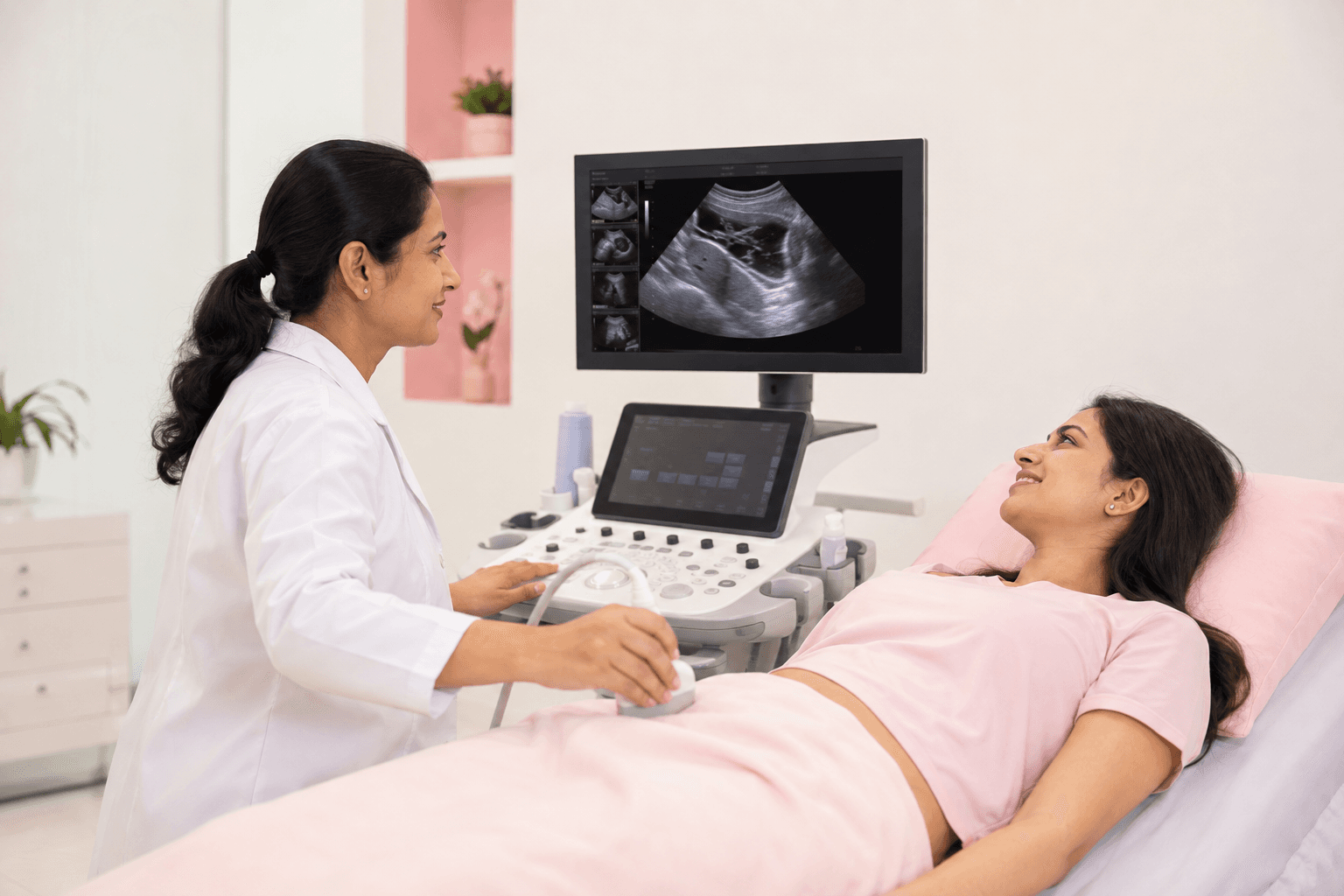
Transvaginal Ultrasound
Ultrasound scans are performed every few days to track follicle growth. The doctor measures the size and number of follicles to determine when they are mature.
A follicle is generally considered mature when it reaches 18-22 mm in diameter.
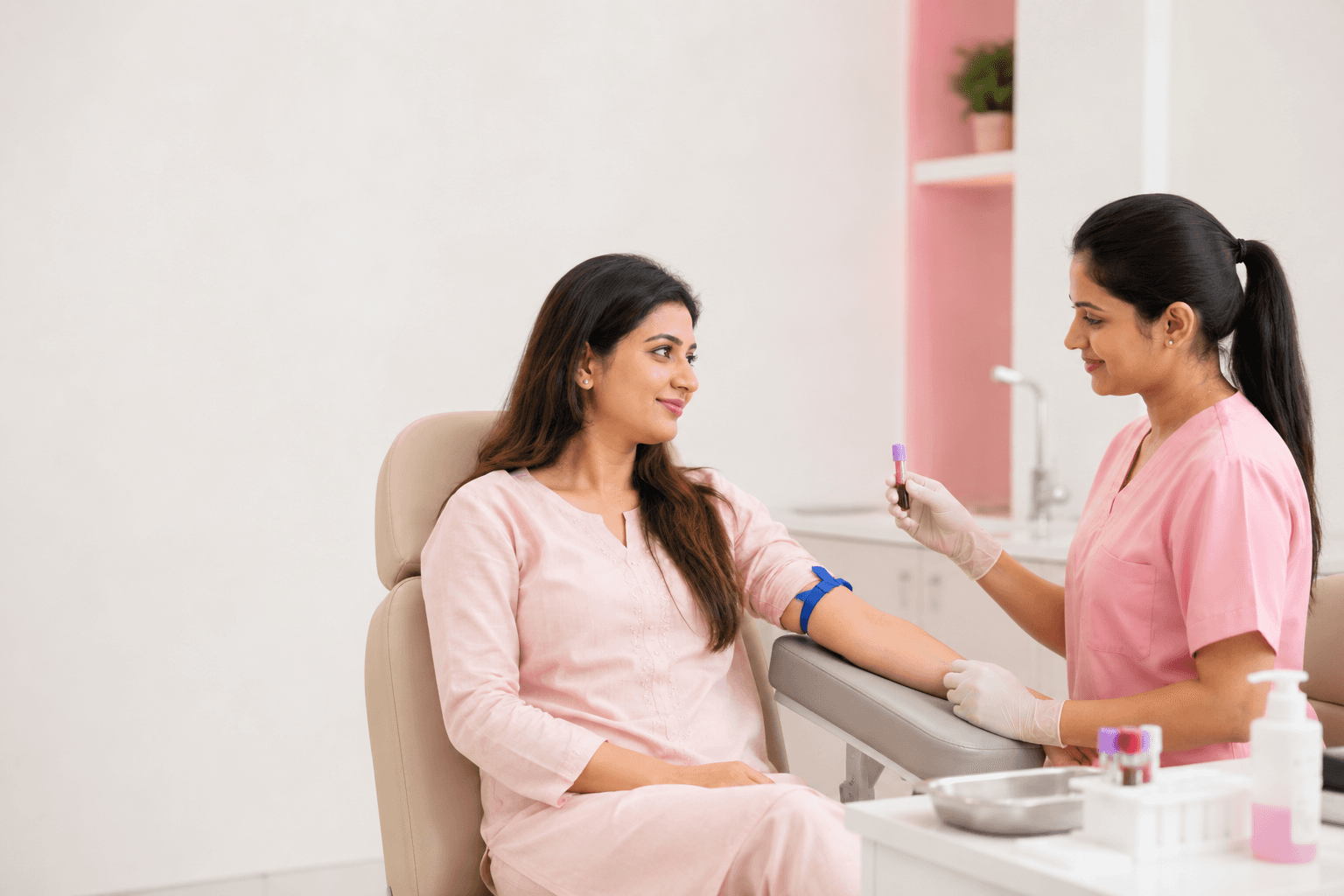
Blood Tests
Blood tests may be performed to check hormone levels, including oestradiol (E2), which is produced by growing follicles. These results help guide medication dosage adjustments.
Why Monitoring Matters
Monitoring is essential to:
- Determine the optimal time for intercourse or IUI
- Adjust medication dosage as needed
- Reduce the risk of multiple pregnancy
- Detect and prevent OHSS early
- Cancel the cycle if too many follicles develop
Preparing for Ovulation Induction
Before Starting Treatment
Your fertility specialist may advise:
- Complete fertility evaluation for both partners
- Blood tests to check hormone levels
- Pelvic ultrasound to assess ovaries and uterus
- Semen analysis for the male partner
- Lifestyle modifications — healthy diet, weight management, smoking cessation
Lifestyle Factors That Can Improve Success
Ovulation Induction Cost in Noida
The cost of ovulation induction in Noida varies depending on several factors. These may include:
The final cost should be discussed with the clinic after evaluating your individual treatment plan.
Questions to Ask Before Ovulation Induction
Consider asking:
Why Choose Divine IVF for Ovulation Induction in Noida?
- ✓Personalised Fertility Care — Treatment is tailored to your individual diagnosis, hormonal profile, and response to medication.
- ✓Close Monitoring Throughout — Regular ultrasound scans and blood tests ensure optimal timing and safety during your cycle.
- ✓Expertise in PCOS and Ovulation Disorders — Comprehensive care for women with PCOS, irregular cycles, and hormonal imbalances.
- ✓Integrated Fertility Treatments — Ovulation induction can be combined with IUI or progressed to IVF if needed, all under one roof.
- ✓Evidence-Based Treatment — The aim is to choose the most appropriate treatment based on your individual situation and medical evidence.
- ✓Care Under Dr. Mandavi Rai — Fertility treatment is provided under the guidance of Dr. Mandavi Rai, Gynecologist & IVF Specialist in Noida.
- ✓Convenient Location in Sector 76, Noida — Divine IVF is located in Sector 76, Noida, for women seeking fertility treatment in Noida.
Book an Ovulation Induction Consultation in Noida
If you have irregular periods, PCOS, or have been trying to conceive without success, ovulation induction may help. Discuss your fertility concerns individually with your specialist. At Divine IVF, Sector 76, Noida, Dr. Mandavi Rai provides personalised ovulation induction and fertility treatment based on your individual needs.
Divine IVF · Sector 76, Noida, Uttar Pradesh
Resources
Common questions
Ovulation induction is a fertility treatment that uses medication to stimulate the ovaries to release mature eggs, often for women who do not ovulate regularly.
It is commonly recommended for women with irregular or absent ovulation, PCOS, hormonal imbalances, or unexplained infertility.
No. Ovulation induction is a simpler, less invasive treatment. IVF involves retrieving eggs, fertilising them in a lab, and transferring embryos.
Common medications include oral tablets like Letrozole and Clomiphene, as well as injectable gonadotropins (FSH).
A typical cycle from starting medication to pregnancy test takes about 4-6 weeks, depending on your response to treatment.
The treatment itself is not painful. Injectable medications may cause mild discomfort at the injection site. Monitoring involves ultrasound scans, which are generally well-tolerated.
Some women may experience bloating, headaches, mood swings, nausea, or pelvic tenderness. These are usually mild and temporary.
Success rates vary depending on age, cause of infertility, and treatment protocol. Ovulation induction may restore normal pregnancy rates of 20-25% per cycle.
There is a risk of multiple pregnancy if more than one egg is released. Careful monitoring helps reduce this risk.
OHSS is a rare but serious complication where the ovaries become overstimulated and swollen. Close monitoring helps prevent and manage this condition.
Yes. Ovulation induction is often the first-line treatment for women with PCOS who are trying to conceive.
Yes. Regular ultrasound scans and blood tests are important to track follicle growth, time intercourse or IUI correctly, and reduce risks.
Yes. Ovulation induction is often combined with Intrauterine Insemination (IUI) to improve the chances of pregnancy.
A trigger shot is an hCG injection given to induce final egg maturation and release. It helps time intercourse or IUI precisely.
Cost depends on the type of medication (oral or injectable), number of monitoring visits, and any additional procedures like IUI.
You can consult Dr. Mandavi Rai at Divine IVF, Sector 76, Noida for personalised ovulation induction and fertility care.
Ready to talk to Dr. Mandavi Rai?
Bring your questions, your history, and your pace — we`ll build the next step together.